Sunday, 15 April 2018

How 3D printing disrupting Automotive & logistics industry

3D printing tooling additionally allows design groups to avoid delay because they can be a lot of responsive with the flexibility to make one-off custom parts.


There are many different types of 3D printing that may be applied to automotive parts and manufacturing. While different types of plastic printing are grabbing headlines, some corporations are looking at large metal parts.

Benefits of 3D Printing in Automotive Design

Leading global corporations have recently begun to realize the industrial benefits of 3D printers in automotive manufacturing on the far side prototyping. 3D printing has considerably transformed the way automobiles are designed, developed and manufactured. 3D printers in automotive manufacturing and design can give global automobile manufacturers the following advantages.

Rapid Prototyping: One of the main advantages of 3D printers in automotive design is that the direction of rapid prototyping within the pre-manufacturing stage. Companies have the prospect of developing everything starting from scale-models right down to individual component, quicker than ever. Prototyping in-house permits businesses to manage any Intellectual Property (IP) infringements and information leaks.

Lower Turnaround Time: Time saved within the prototyping stages drastically reduces turnaround time across all subsequent stages of manufacturing. This adds nice business price in terms of lower prices and else legerity.

Low Consumption and Wastage: 3D printing in automotive design drives lower consumption and wastage unlike the traditional approaches of auto design. Learnings from this may be effectively leveraged in reducing consumption and wastage of materials in all subsequent manufacturing stages.

Lower Costs: Time and resources saved within the various stages of production reduces overall value of production. Lowering prices at each and every level allows companies to transfer some of the cost-reduction edges to the end-user.

Added Flexibility: 3D printers in automotive design empowers companies to do multiple options and iterations right within the development stages, resulting in optimum and economical automobile design. Manufacturers have the agility to create design changes on-the-fly serving to them keep in-tune with market needs and prior competition.

Why 3D Printing for Automotive Design?

Replace expensive CNC Production

By exchange expensive and lead-time essential CNC-milled components with in-house manufactured plastic parts, you will be able to dramatically reduce your production prices.

The printed plastic parts additionally perform higher technically, weigh less and are well suited for the assembly of advanced bodies that, once using typical metal-cutting processes, would be terribly tough and very expensive to produce.

3d printing automotive parts in chennai|3d printing automotive parts in bengalore|3d printing in automotive industry pithampur|3d printing in automotive industry Tamil Nadu|3d printing automotive parts in Lucknow|3d printing automotive parts in Durgapur|3d printing in automotive industry Vijayawada Andhra Pradesh|3d printing in automotive industry Jamshedpur Jharkhand|3d printing automotive parts in Rudrapur uttarakhand|3d printing automotive parts in Chakan Pune india


Create higher Assembly Tools

For hand-held devices used on the assembly line, engineers will use 3D printing to create ergonomically designed assembly aids that perform higher than conventionally created tools.


What Are The Implications For The Logistics Industry?

The implications of this new manufacturing technology for the logistics industry could be massive:

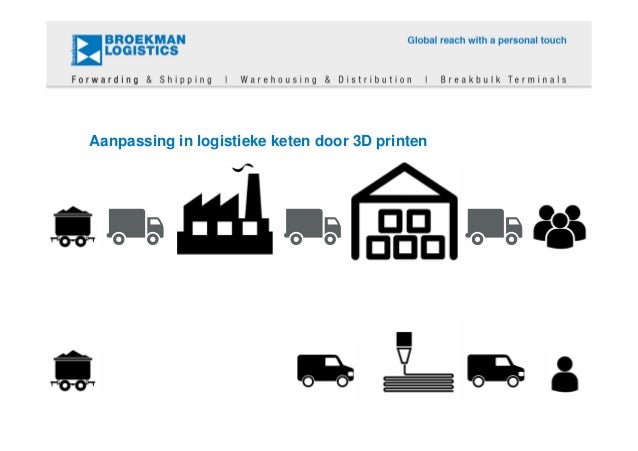
Potentially a proportion of goods which were previously produced in China or other Asia markets could be ‘near-sourced’ to North America and Europe. This would reduce shipping and air cargo volumes.
The ‘mass customisation’ of products would mean that inventory levels fall, as goods are made to order. This would have the effect of reducing warehousing requirements.
There would be fewer opportunities for logistics suppliers to be involved in companies’ upstream supply chains, as manufacturing processes are increasingly re-bundled within a single facility. Tiers of component suppliers are done away with, as is the need for supplier villages, line side supply etc.
Downstream logistics would also be affected. Build-to-order production strategies could fundamentally impact the manufacturer-wholesaler-retailer relationship. In the future the shopping experience could also be vastly different. In some sectors, retailers will either cease to exist or become ‘shop windows’ for manufacturers, keeping no stock of their own. Orders are fulfilled directly by the manufacturer, and delivered to the home of the consumer.
A major new sector of the logistics industry would emerge dealing with the storage and movement of the raw materials which ‘feed’ the 3D Printers. As 3D Printers become more affordable to the general public, the home delivery market of these materials would increase.
The Service Parts Logistics sector would be one of the first to be affected. At present billions are spent on holding stock to supply products as diverse as cars to x-ray machines. In some cases huge amount of redundancy is built into supply chains to enable parts to be dispatched in a very short timescale to get machines up and running again as fast as possible.
Immagine


Packers and movers vadodara | packers and movers Ahmedabad | packers and movers in vapi | local movers and packers in vadodara | packers and movers surat | car transport service india | transportation service india |Relocation Service in Gujarat | packers and movers in vadodara |Ware House Service in vadodara Gujarat |packers and movers in baroda |movers and packers rates in vadodara

Immagine

Immagine

Friday, 13 April 2018

3D Printing Is Changing the Medical Field

How does 3D printing work?

3D printing is part of the innovative process called additive manufacturing, which means the production of three dimensional solid objects from a digital file. The printer uses a kind of layering process, by which one layer is added after the other until you have a fully formed object. It allows designers and engineers to create complex parts for cars, machines or airplanes much cheaper and in much less time than any other production method. Currently, rapid technological development enables start-ups and other companies to bring 3D printers out of factories into smaller businesses and even people’s homes.

Immagine

Medical equipment quickly and in a cheap way

3D printing splints, medical models used before surgeries or other necessary means for healing could result in saving huge amounts of money. And there are already brilliant examples on the market how to do it!

a) Finger splints

Ian McHale, a senior at the US Steinert High School created a blueprint for producing finger splints. A low-end 3D printer can print his splint quickly and affordably, about 2¢ worth of ABS plastic in about ten minutes! For developing countries, where splints can often be ordered from oversees only in bulk, it could mean the cheapest solution for poor communities. At the same time, it could easily serve personal needs.
b) Tumor models

3D printing can also help medical research as well as the outcome of complex operations and especially difficult cases. Researchers in China and the US have both 3D printed models of cancerous tumors to aid discovery of new anti–cancer drugs and to better understand how tumors develop, grow, and spread.
c) Organ models

Researchers have also used scans of animal hearts to create printed models, and then added stretchy electronics on top of those models. The material can be peeled off the printed model and wrapped around the real heart for a perfect fit. The next step is to enhance the electronics with multiple sensors.

How 3D printed medical equipment saves lives

Kaiba Gionfriddo was born prematurely in 2011. After 8 months his lung development caused concerns, although he was sent home with his parents as his breathing was normal. Six weeks later, Kaiba stopped breathing and turned blue. He was diagnosed with tracheobronchomalacia, a long Latin word that means his windpipe was so weak that it collapsed. He had a tracheostomy and was put on a ventilator––the conventional treatment. Still, Kaiba would stop breathing almost daily. His heart would stop, too. His caregivers 3D printed a bioresorbable device that instantly helped Kaiba breathe.

Plastic 3D printed implants

Not only prosthetics, but also implants could be 3D printed in a personalized way. This is especially important in complex and rare cases, such as the following. Dutch surgeons replaced the entire top of a 22 year–old woman’s skull with a customized printed implant made from plastic. The unnamed 22-year-old patient was suffering from a rare condition that caused the inside of her skull to grow extra bone, which squeezed her brain. The growth was discovered after she reported severe headaches and then lost her sight and motor control. If untreated, the extra bone would have killed her.
Personalized plaster casts

3D printing casts could finally transform the experience of breaking a bone. In 2014, designers have experimented with 3D printed wrist braces which they printed in an open shape, then bended on the wrist of the patient after heating in hot water. I also came across the invention of a Dutch student named Pieter Smakman, who created a scanner using cheap laser pointers, 32 cameras, and a Raspberry Pi computer. His system is able to precisely digitize the hand and fingers and may also help in fitting prosthetic devices to each individual patient.

Low-Cost Prosthetic Parts

Globally, over 30 million people need mobility devices such as prosthetics, while 80 percent of the world’s amputees do not have access to modern prosthetics. However, creating traditional prosthetics is very time–consuming and destructive, which means that any modifications would destroy the original molds. Researchers at the University of Toronto, in collaboration with Autodesk Research and CBM Canada, used 3D printing to quickly produce cheap and easily customizable prosthetic sockets for patients in the developing world.

Bones

Professor Susmita Bose of Washington State University modified a 3D printer to bind chemicals to a ceramic powder creating intricate ceramic scaffolds that promote the growth of the bone in any shape. It helps hip and knee replacements last longer through developing a body-friendly calcium phosphate-based coating for the implant materials. In 2015, the National Institutes of Health awarded her a $1.8 million grant that will enable her team to continue refining the coating and improve the way in which implants integrate into the body. Once integrated, the coated implants are expected to last longer – possibly doubling the life of cemented implants.

3d printing medical companies in vadodara, ahmedabad,mumbai,chennai,bangalore,tamilnadu,punjab,gujarat,india

medical 3d printing

3d printed prosthetics

3d printing medical advances

surgical instruments


The future of pharma: 3D printed drugs

Last year, the FDA just approved an epilepsy drug called Spritam that is made by 3D printers. It prints out the powdered drug layer by layer to make it dissolve faster than average pills. Imagine how fast the distribution of medication could be with a 3D printer in every second or third pharmacy! Or imagine how different our attitude towards drugs of pharmacies would be, if we could print out drugs at homes on our own 3D printers!


Immagine

Immagine

local movers and packers in vadodara


Monday, 9 April 2018

3D opportunity for Embedded Electronics

Energizing products and supply chains: The underlying benefits of AM

Additive manufacturing enables companies to build nonstandard electronics, complex assemblies, and intricate or curvilinear shapes. In this way, AM designers are free to design innovative electronic objects that could not have been produced through conventional means, and they can optimize product designs for functionality with fewer manufacturing constraints.


AM designers are free to design innovative electronic objects that could not have been produced through conventional means, and they can optimize product designs for functionality with fewer manufacturing constraints.

Built to construct electronic and biological designs at the nanoscale, the Aerosol Jet 300 can process metals and “biologics” by depositing materials via an atomized spray onto any viable substrate.


Building electronics separate from the part production process

AM technologies can be used to manufacture electronics that can later be integrated into parts fabricated via AM or traditional manufacturing techniques. In this approach, electronics are printed onto a surface and later added to the product during assembly. While this approach is easier to implement than the second approach of building electronics within the production process, it requires additional assembly efforts.

At its core, the Aerosol Jet 300 is a departure from traditional rapid prototyping and rapid manufacturing machines as it is currently only capable of adding electronic components and circuitry to previously built designs.

While electronics will likely dominate the workload of the Aerosol Jet 300, the system’s ability to process polymers and biological materials allows it to function in a wide variety of applications. This gives the Aerosol Jet 300 room to grow in the burgeoning field of additive manufacturing.

Once loaded into the system's atomizer, inks are split into fine aerosol droplets (1-5 microns in diameter) and carried via dry N 2 or compressed air spray to the system's deposition head. Once they are at the system's head, a second stream of sheath gas is added to the mixture surrounding the ink in an annular, focusing ring. As the ink flows from the deposition head it is concentrated and compressed, resulting in a fine mist of ink that can accurately place a CAD design directly onto any relatively smooth surface material. In addition to accurately jetting inks onto any material, the 300 is also capable of printing onto complex surfaces such as irregular polygons, spheres, etc.
Once a design has been printed onto its target surface, some post-processing work must be done to ensure the ink's desired properties reach their full potential. For metallic inks, a thermal sintering process is required to increase electrical conductivity and adherence. In the case of polymers, a UV curing process is used to bake the inks onto the surface.

3d printed electronics Gandhinagar| 3d printed electronics Rajkot india| embedded electronics Vadodara india| embedded electronics Gandhinagar india| embedded electronics surat india| drone electronics ahmedabad india| 3d printed electronics Haldia india| 3d printing electronic components mohali Punjab india| 3d printing applications in electronics Siliguri india| 3d printing embedded electronics Dehradun india|additive manufacturing electronics thane Mumbai india


Though the Aerosol Jet 300 is still a niche AM machine, OPTOMEC is looking to complement its Aerosol system with traditional rapid prototyping techniques so plastic and metal components can be embedded with 3D electronic systems. If they can achieve their goal the 300 could become an invaluable tool for product designers across a wide spectrum of industries, including consumer electronics, solar cell manufacturing, sensors and biomedical devices.


packers movers vadodara
__________________
3d print india | 3d printing service odisha Jharkhand chhattisgarh anand india | 3d printing anand |3d printed gallery | 3d model makers | 3d printing delhi ncr mumbai pune maharashtra india | 3d printing blog-news-update | 3d printed jewelry -fashion gujarat | 3d printing medical equipment | medical 3d printing companies | 3d printing materials


Friday, 6 April 2018

3D Printing-emerging in medical device & industrial industry

The medical device industry is facing a plethora of challenges which involves the regulatory challenges and reducing the iterative designs. Under this scenario, 3D printing seems to be the most promising option as it uses layer-by-layer build-up process to create 3-dimensional objects.

3D Printing- An emerging option in medical device industry

3D printing plays an expanding role in medical and dental manufacturing. It is very cost-effective, efficient and customizable option in for the medical devices industry for devices including dental implants, hearing aids, prostheses, custom-made knee and hip implants, and surgical instruments.


Some of the applications of 3D printing are as follows:

Application in Orthopaedics

• It can be used in printing cartilage and bone. The printer’s ink delivers mechanical strength to the bone and cushioning effect to the cells.

Application in organ growth

• 3D Printing can be used for printing blood vessels which can be used for grafting purposes.

• It is also used for printing of organs like liver and kidney.

• It also helps in the planning of complicated surgical maneuvers like skull base tumor removal.

Application in medical devices

Prototyping: 3D printing techniques are very efficient in a development of prototypes at a very faster rate. This reduces the efforts of design, hardware and software team and helps in providing an optimized design which is much closer to the needs of customer.


Companies Are Embracing Complexity of Design

In so many ways, 3D printing’s history as a rapid prototyping technology has led to a major bias in machines, tools and methods, which focus on trying to simplify the process of moving from design to part production. Currently, more than 60% of 3D-printed parts are printed for rapid prototypes.

Focusing so intensely on rapid prototyping has limited the tools engineers need to develop a deeper understanding of these technologies. Major software companies like Siemens, Autodesk and Dassault Systemes are racing to create in-depth 3D design and engineer tools to unlock the full potentials of 3D printing. Software design and simulation tools like Netfabb and Materialise will allow engineers to gain a clearer understanding of the technology and maximize its capabilities for series part production.

3d printing medical companies in vadodara, ahmedabad,mumbai,chennai,bangalore,tamilnadu,punja b,gujarat,india

medical 3d printing

3d printed prosthetics

3d printing medical advances

surgical instruments


Navigating Complex Design

Additive manufacturing requires a completely different approach to the current methodology that almost every company has implemented for the design and manufacturing of parts. These traditional organizations that make the economic decision to invest and adopt 3D printing into their ecosystem often overlook the material process, and it becomes a second thought during the design process.

In order to maximize and understand the freedom that 3D printing allows when utilizing new materials, industrial designers, mechanical engineers, and material scientists must work in harmony from the beginning to understand new material properties.

rapid prototyping bangalore| rapid prototyping Mumbai pune maharashtra| industrial 3d printing jamnagar| industrial 3d printing Ernakulam| industrial 3d printing Coimbatore

It can be extremely intimidating for companies to rethink and rebuild their workflows and processes as it relates to engineering and manufacturing. More and more, companies are ready to embrace these new workflows, but need advanced technologies to guide and automate the process to ensure successful adoption. The relentless pace of innovation within the industry is in need of responsive technology.


packers and movers vadodara

Wednesday, 4 April 2018

3D Printing: The Accelerator for New Product Development You


In today’s highly competitive environment, manufacturers need to have agility to adapt quickly to market changes. Feasibility of a product idea is time-sensitive. Conventional product design principles and techniques are unable to keep up with this pace. 3D printed consumer product design approach aims to empower manufacturers by enhancing collaboration, saving time in prototyping and thus reaching the market and the consumers faster.


With the 3D printed consumer product design approach, the designers get a crucial feedback in the early design stages, making product development faster and efficient. 3D printing in product development process is ideal for rapid prototyping, functional testing, concept models, customized parts, and limited production runs to name

Implications

* In current 3DP adoption the assumption of credit varies between retailers, FMCGs and technology vendors. Retailers will likely try to label services and products as their own if possible, but will face rising resistance as 3D printing gains a foothold in the consumer market.

* Retailers will have little involvement in the field once printers become common features in homes.

* 3D printers could become revolutionary tools in crowdsourcing private label products. However, potential may lie in the development and trial phase while mass-production could be kept for traditional manufacturing methods.

* Keeping retailer-exclusive (private-branded) design catalogues will likely not succeed. However, for products complementing other retailer-specific items (like spare parts) it could be viable.

* FMCG manufacturers should try to get their brands promoted in connection with 3DP and stores are perfect venues for this. Establishing themselves as materials and design suppliers early on is important if/when home printing breaks through.

benefits of 3D printing for product design:

forward
Reduce Costs: Outsourcing prototypes takes days and is expensive. Every change and iterations to the design leads to additional costs. With Divide By Zero 3D printers empowers users to create prototypes in hours and create multiple versions, at a fraction of the cost.
forward
Rapid Prototyping: 3D printed consumer product design allows for rapid prototyping in the pre-manufacturing stage. Time saved in the prototyping stage helps businesses manufacture quicker and reach markets faster. Overall, manufacturers enjoy the benefits of lower costs and added agility
forward
Risk Reduction: 3D printed consumer product design approach helps designers test and identify future design and manufacturing problems. With 3D printing, designers get a real-life version of the product to study, improve, and optimize. This reduces risk by testing a design before making any tool investments. Risk of product idea leaks and violation of Intellectual Property (IP) can be minimized as prototyping can be done in-house.

rapid prototyping bangalore| rapid prototyping Mumbai pune maharashtra| industrial 3d printing jamnagar| industrial 3d printing Ernakulam| industrial 3d printing Coimbatore| industrial 3d printing Dadra & Nagar Haveli| prototype manufacturing companies in jamsedhpur india| prototype manufacturing companies in secundrabad india| prototype manufacturing companies in satara india| additive manufacturing applications nagpur| rapid manufacturing Kharagpur| rapid manufacturing Dehradun


Promoting services and products under their own label will improve the innovation perception of a retailer’s brand, but this will not be sustainable in itself. For crowdsourced development and trialling, though, it should be a viable application in the long run.

Producers should try and co-operate with retailers to get their solutions and designs into stores. Retailers will be interested in providing innovative and personalised experiences instore so they ought to be open to approaches. Developing actual 3D printers that suit specific products as Hershey did or developing printable forms of products compatible with food printers now in development from XYZprinting will be important to prepare for a future where home printing is common and establish producers as material and design suppliers early on.


movers packers vadodara

Tuesday, 3 April 2018

3D Printing In The Electronics Sector

It simply means that the use of 3D printer kits in the electronics industry is in full swing and shows no signs of stopping, near or far.

But is it all that you wished to know? Let us discover some other key aspects of 3D printing and its major effects on the electronic field.


Additive Manufacturing Of Electronics:

3D printing technology has been reliant on various non-standard materials such as plastics, nylon, ceramics and metals etc. for the exterior façade of the products.

However, with electronics, the trend is bound to change. It generally requires materials which are effective to form the internal circuitry and that too without any hassles.

Thus, the focus now shifted towards printing materials which include conductive inks. For instance, use of toners laden with charged particles was used to build the circuitry and these offer a significant precision level too.

Typically, a common 3D printer kit, which fabricates 3D printed electronics, uses two kinds of material sources:

•The Base Material: This is used to construct the exteriors of the products

•The Conductive Material: This is used to formulate circuitry (which is generally the inside portion)

Thus, as you used your Prusa i3 kit to form innumerable domestic products, the commercial automated products have facilitated the formation of batteries, circuits, sensors, circuit boards, microelectromechanical systems, antennae and hoards of similar electronic parts.

The Kinds Of Technologies Involved:

The process by which the electronics are manufactured using 3D printing technology could be grouped in two ways:

•Electronics are built secluded from the part fabrication procedure

•Electronics are built within the part production process

And as expected, each of these approaches could always have its pros and cons and could be used for different applications, which relies on your objectives of fabrication.

The Major Materials Employed:

In addition to what has already been in use (the plastics, thermoplastics, resins, ceramics and metals etc.), the additive manufacturing of electronic components has employed some newer materials such as copper ink, conductive silver and other conductive materials.

Some of the latest electronic 3D printing equipment which are currently in use are:

•Graphene: Graphene is a type of graphite that has high thermal and electric conductivity. Plus, it is flexible, transparent and is highly suitable for manufacturing the integrated circuitry in electronics.

•Nanomaterials: These are the materials which contain particles of some conductive materials such as conductive copper or silver in nanoscale measurement. The inks are said to be highly conductive in nature and promise various applications.

3d printed electronics Gandhinagar| 3d printed electronics Rajkot india| embedded electronics Vadodara india| embedded electronics Gandhinagar india| embedded electronics surat india| drone electronics ahmedabad india| 3d printed electronics Haldia india| 3d printing electronic components mohali Punjab india| 3d printing applications in electronics Siliguri india| 3d printing embedded electronics Dehradun india|additive manufacturing electronics thane Mumbai india


3D Printing Benefits For The Electronics:

We saw how the use of 3D printing technology enabled printing hoards of electronic components.

But is it more advantageous than the original production methods?

Let us see the advantages of 3D printing in the electronic field:

•No Flat-Beds-Only Necessary: With the use of 3D printing, you do not need flat circuit boards for fabrication of products. And due to this, it invites newer opportunities to create the most innovative shapes and designs for products such as solar panels, electronic prosthetics, batteries and glucose testing strips etc.

•Bulk Customization: The technology facilitates a significant tractability for customization on the unit level. And this is applicable not only for mechanical components but for electromechanical and electronics as well.

•Reduction In Material Wastage: This is one of the universal advantages of 3D printing technology and it applies to the electronics sector too. You need to provide only the required amount of materials to formulate products and there is negligible scrap encountered.

•Reduction Of Product Size: With additive manufacturing, it is not required to produce external packaging for the extended portions. For instance, smartphone antennae could be positioned directly on the phone case, which helps in size-reduction of the device.

•No Harmful Chemicals Encountered: It required chemicals to eliminate extra material from the desired products when the traditional processing methods were used. This is known as ‘etching’. But with 3D printing, there is no need for such chemicals as the materials get laid down only when needed.

•Streamlined Operation: The 3D printing technology eliminates the traditional step-by-step production process which included lithography, film deposition, etching and packaging etc. processes. Instead, all these are incorporated as a single process in a single assembly. Thus, it has simplified the production process a great deal.

Thus, 3D printing technology has promised a lot of advantages over the traditional production methods and this is bound to bear results in the upcoming periods.

On The Bottomline:

The additive manufacturing technology has proved to be a worthy and more advantageous successor to the traditional printing methods.

You could have used an Alunar 3D printer for your domestic printing needs, but the trends have taken a major turnaround.

And similar to most of the industries, the electronics sector has also experienced immense advantages with the use of this technology. So, if you have a plan in mind to set up your own production industry for electronics, you could always follow the path to work in association with the 3D printing technology.


Integrative approaches

Already other disciplines such as nanotechnology are benefiting the field of electronics. The focus at micro level is allowing better and efficient systems to be created. Furthermore, automation has become a norm within many devices.

The science of 3D printing and specially its rising cost effectiveness has provided a unique opportunity for engineers. Furthermore, from a learning perspective, it can allow prospective students to learn important production procedures without a major industrial infrastructure.

Domains such as nanotechnology are also assisting 3D printing in a way that it can be better incorporated in engineering. This can be seen with the example of sensors that has been described above. The carbomorph material can be ‘nano’-printed and substituted on various systems in order to increase sensitiveness. Secondly, the diversity of the circuit can also be improved using such an approach.

3D printing has evolved from a novelty science to more of a commercial venture. Its efficacy can be seen in examples seen above and the cost reduction is a major factor for spurring increase usage. Even people with average knowledge of engineering can take a dab at making products and customizing them at their will.


packers and movers vadodara

Monday, 2 April 2018

3D Printing Is Revving Up Automotive & industrial Manuf.?

Rapid Prototyping

For some years now, rapid prototyping has been helping automotive manufacturers to cut down lead times for designing new cars or updating current models. The use of 3D manufacturing means auto manufacturers can test a variety of prototypes before production. Ford says that prototype parts can be built in days or hours, versus months, at far less cost than using traditional methods since 3D printing eliminates the need for tooling and molds.


Production Tooling

In “3D opportunity in the automotive industry,” Deloitte University Press describes how that AM is enabling the fabrication of customized tools to boost shop floor production. It cites the use of AM by BMW in direct manufacturing to make hand tools that are used in test and assembly. BMW reported the customized tools helped save 58 percent in overall costs. It also reduced project time by 92 percent.

Parts Production

The use of metal as a printing material is still in its early stages. Audi, as one example, is using 3D to produce the metal water pump wheel of its DTM racecar, which replaces a previously plastic part. The German car manufacturer is also using the technology to produce spare parts and in turn disrupt the supply chain.

The current method of dealers ordering parts from a central location is costly and time consuming. While Audi hasn’t as yet implemented 3D printing across its entire part catalog, by virtue of placing 3D printers around the globe it is able to print certain parts on demand. Besides benefiting the customer, the process is eliminating the over production of certain parts.

Continuous Parts Improvement

The use of 3D printing in the automotive industry doesn’t begin and end with the printed part. As manufacturers embed tracing marks and sensors into the product, they will be able to track every step of a product lifecycle from initial 3D object scan to design through production, quality measurement, delivery and real-world use. Using in-lifecycle information, manufacturers can improve the design and fabrication of future parts.

3d printing automotive parts in chennai|3d printing automotive parts in bengalore|3d printing in automotive industry pithampur|3d printing in automotive industry Tamil Nadu|3d printing automotive parts in Lucknow|3d printing automotive parts in Durgapur|3d printing in automotive industry Vijayawada Andhra Pradesh|3d printing in automotive industry Jamshedpur Jharkhand|3d printing automotive parts in Rudrapur uttarakhand|3d printing automotive parts in Chakan Pune india


The potential for a continuous improvement cycle becomes huge as the entire manufacturing process moves seamlessly from physical to digital and back to physical to create a “blended reality.” Manufacturers will be able to improve auto parts based on their performance or use and even modify them for weather and travel patterns.

Today, there is a focus among product manufacturers on enhancing the prototyping process through 3D printing applications with a view to establishing robust spare parts production in the next five years. This effort will help eliminate the risks and uncertain costs associated with warehousing products that are not in demand. And advancements will continue. Product postponement capabilities are expected to emerge within the next 10 years that will give industrial companies fingertip access to a wide range of parts created only as needed.

Optimizing opportunities

Five key areas will need to be developed to enable companies to take full advantage of the 3D printing opportunities they identify. These areas include:

Agile design engineering. Industrial engineers will need to employ a flexible, multi-stage process using 3D printing software that can enable them to visualize, test, validate, customize and readily modify 3D printing products.
Sourcing. They also should use the latest 3D printing technologies to maximize their ability to capitalize on new opportunities and gain a competitive advantage in the marketplace. Establishing a manufacturing digital ecosystem that focuses on the digital attributes of 3D printing will help companies sustain a competitive edge. To reduce design costs, companies should fully exploit the pay-per-print process, as it moves design closer to prototyping, creates product concepts in less time at lower costs, and reduces the need for external, physical prototyping.
Distribution. Developing a dynamic digital supply network is key. It should include material suppliers, intellectual property considerations, and a digital inventory management system for warehousing in-demand 3D digital product files and spare parts to support customization.
3D manufacturing. As demand for tailored products and services increases, integrating 3D manufacturing into the organization’s existing production processes could be essential to competing in the emerging industrial product market. The accelerated prototyping and additive manufacturing capabilities 3D printing provides also could help manufacturers reduce costs, save time and increase profitability.

Logistics and field service

While it seems ideal, having parts in the right place at the right time can actually be a handful. And it’s one of the larger financial outlays that a manufacturer has to keep in mind. In fact, transportation often accounts for 10 to 12 percent of a manufacturer’s yearly budget. What’s more, if a product isn’t available at a dealership or parts store when a customer needs it, there’s a good chance they’ll go elsewhere next time they have a problem. movers and packers vadodara

3D printing, however, stands to nullify this problem, as dealerships, parts stores and even field service teams may soon be able to 3D print parts on-site. While this may be in the more distant future, this could save companies time and money, and keep customers satisfied and loyal.

The automotive service supply chain is already in a state of change. With brands such as Tesla allowing customers to circumvent the conventional dealership model and work with the OEM – along with third-party vendors like Amazon making forays into the automotive aftermarket – automotive after-sales service is already much different than it was even just a few years ago. And as 3D printing continues to become a bigger piece of the pie, the space will continue to evolve.

rapid prototyping bangalore| rapid prototyping Mumbai pune maharashtra| industrial 3d printing jamnagar| industrial 3d printing Ernakulam| industrial 3d printing Coimbatore| industrial 3d printing Dadra & Nagar Haveli| prototype manufacturing companies in jamsedhpur india| prototype manufacturing companies in secundrabad india| prototype manufacturing companies in satara india| additive manufacturing applications nagpur| rapid manufacturing Kharagpur| rapid manufacturing Dehradun